Türkçe (Turkish)
 English (İngilizce)

Project Goal :
Pre Evaluation
Our team was engaged to evaluate and monitor the age-induced structural integrity of a 72-meter, 21-story high-rise building (16 above-ground and 5 basement levels) situated in Beşiktaş, Istanbul.For this structure built in the early 1990s, the project aims to establish baseline condition monitoring through advanced multi-sensor structural health monitoring systems, ensuring comprehensive comparison between pre- and post-event structural responses, particularly in the event of potential earthquakes and seismic tremors.
Structural Health Monitoring
Continuous tracking of the structure’s dynamic characteristics, including elastic natural frequencies, related damping ratios, and mode shapes, through advanced data acquisition systems offers vital information regarding its structural integrity.
This case study details the Structural Health Monitoring (SHM) measurements conducted on the high-rise building, along with the elastic natural frequencies and mode shapes identified through Operational Deflection Shape (ODS) analyses. It also covers the measurement systems and instrumentation procedures utilized throughout the project.
System Installation and Field Measurements
Measurement System and Instrumentation
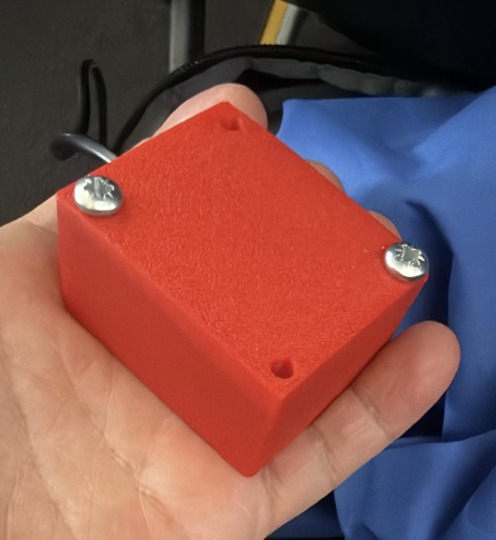
Prior to implementing long-term monitoring, the dynamic parameters of the building must be identified. To this end, a preliminary structural vibration measurement campaign was conducted on the structure. For these measurements, a custom high-precision, triaxial MEMS sensor designated as OSTREAM-S (20 μg/√Hz), developed in collaboration with FİZİX, was utilized. The sensor was engineered by Fatih ALTUNEL from FİZİX specifically for measurement types requiring continuous real-time data streaming, such as structural health monitoring.
Time Synching
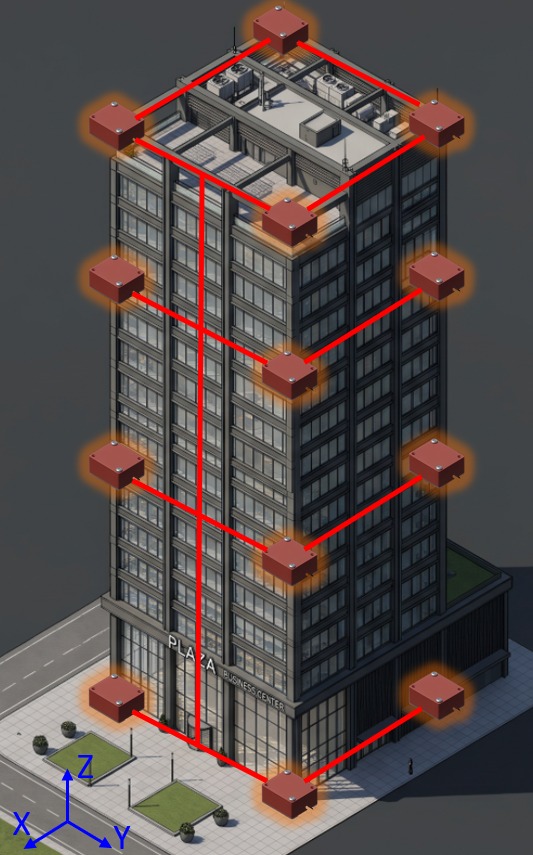
The sensors were interconnected using high-speed Ethernet cables, maintaining time synchronization throughout the measurements. Triaxial data were continuously acquired in 1-hour batches, with an Fmax of 50 Hz deemed appropriate (since structural vibrations of buildings occur at low frequencies, high-frequency data acquisition is not required).
-
The sensors were interconnected using high-speed Ethernet cables, maintaining time synchronization throughout the measurements. Triaxial data were continuously acquired in 1-hour batches, with an Fmax of 50 Hz deemed appropriate (since structural vibrations of buildings occur at low frequencies, high-frequency data acquisition is not required).
Data Analysis
ODS and Natural Frequency Identification
-
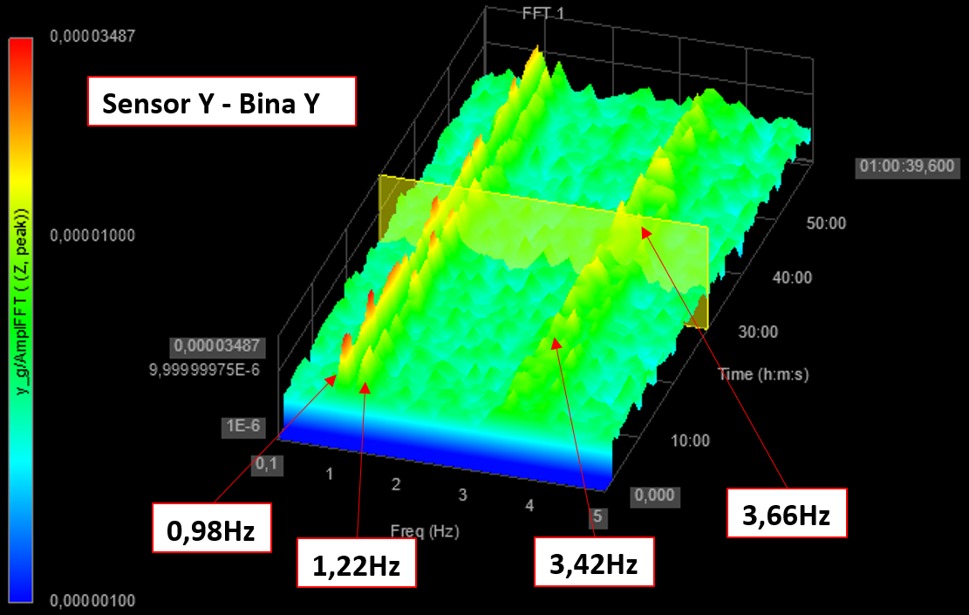
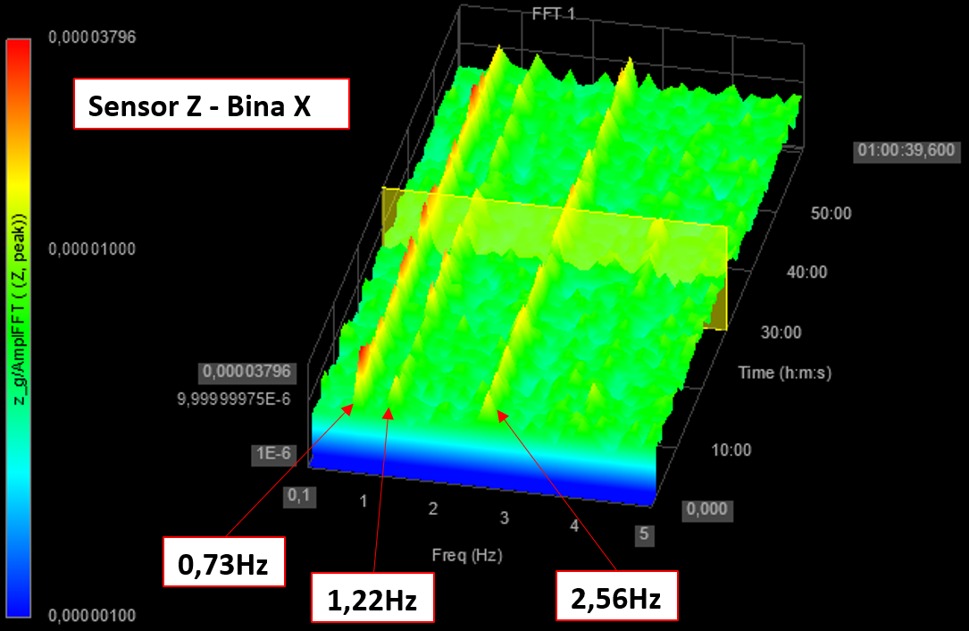
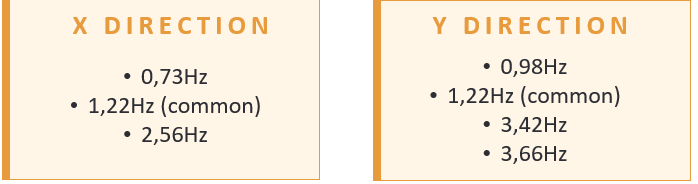
Upon detailed analysis of the long-term measurements, natural frequencies excited by wind, traffic, and environmental activities were clearly observed in the building. The identified modes are presented in the table below:
Picture 1 · Some modes identified
Data Analysis
ODS and Natural Frequency Identification